Open Plan Living: How to Seamlessly Blend Kitchen into Living & Dining Area
Blog Overview:
- How open plan living elevates flow, space, and lifestyle
- Strategic zoning without walls for functional layouts
- Design formulas for blending kitchen, dining, and living areas
- Material, colour, and lighting strategies for continuity
- Storage, acoustics, and styling tips for clutter-free harmony
- When to bring in professionals like Casey Constructions for high-impact transformations
Introduction
Open plan living isn’t just an interior design trend it’s a lifestyle upgrade. Homeowners want openness, connectivity, and flexible living spaces that allow the kitchen, dining, and living room to work as one unified ecosystem. But here’s the catch: achieving open plan harmony is part strategy, part design discipline, and part craftsmanship.
If your goal is to transform a fragmented layout into a seamless, multifunctional space, this guide breaks down the playbook. With insights rooted in real renovation practice and the expert capabilities of Casey Constructions you’ll learn how to create an open plan layout that's cohesive, functional, and visually compelling.
Why Open Plan Living Works: The Strategic Advantage
Open plan living is more than knocking down a wall; it’s an operational change in how your home performs.
1. Improved Flow & Movement
No visual barriers. No bottlenecks. Just uninterrupted circulation from one zone to the next.
2. Ideal for Modern Lifestyles
Cooking, working, hosting, relaxing—everything happens within one connected environment.
3. Enhanced Natural Light
Fewer walls mean light travels farther, creating a brighter and more uplifting environment.
4. A Sense of Spacious Luxury
Even a small home feels bigger when the kitchen, dining, and living spaces share the same visual language.
The Core Foundation: Space Planning for Open Plan Kitchen Living Design
This is where most homeowners go wrong they skip the planning phase. But strategic space planning is the difference between “one big room” and a “high-performance open plan.”
Here’s what your layout must answer:
What’s the natural flow of the space?
Movement from kitchen → dining → living should feel intuitive.
Where should functional boundaries exist?
Not physical walls visual cues (lighting, colours, materials, furniture).
How will traffic move around key elements?
No one wants to dodge bar stools or cut through the TV area to reach the pantry.
Is there room for flexible use?
Small spaces need multi-functional furniture and expandable zones.
Casey Constructions often begins with a detailed spatial audit, ensuring every square metre adds value, not clutter.
Zoning Without Walls: The Modern Approach
Segmentation, not separation. Here's how to create defined zones:
1. Use Rugs to Define Areas
A textured rug under the living area visually anchors the seating section.
2. Switch Up the Furniture Orientation
A sofa facing the dining side acts as a natural divider.
3. Lighting as a Visual Separator
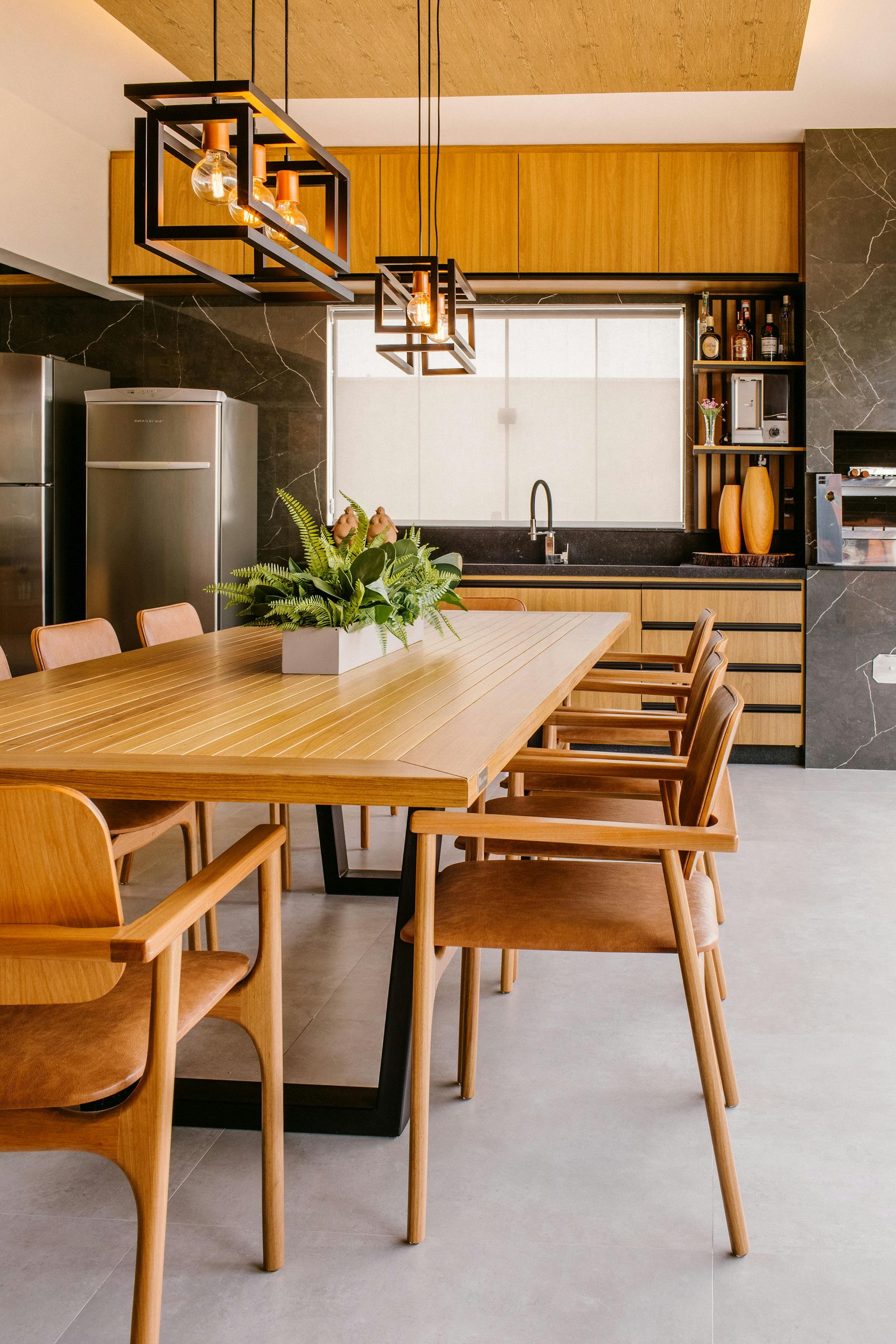
Pendant lights above the island + feature light above the dining table = subtle, effective zoning.
4. Ceiling Treatments
Bulkheads or recessed lighting pathways create architectural zones while keeping everything open.
5. Strategic Furniture Choices
A console table behind the sofa separates living from dining effortlessly.
Designing the Heart: Creating Flow Between Kitchen, Dining & Living
This is where seamless blending happens.
Unified Flooring for Cohesion
One continuous flooring solution immediately removes visual breaks.
Best options:
- Hybrid flooring
- Engineered timber
- Large-format tiles
- Polished concrete (highly contemporary)
Avoid mixing tiles + timber unless you’re intentionally zoning.
Colour Palettes That Tie Everything Together
Use a three-tone design system:
- Primary colour: walls
- Secondary colour: cabinetry, large furniture
- Accent colour: décor, soft furnishings
Pro tips:
- Keep the palette consistent across all zones.
- Repeat materials like black fixtures or brass handles in multiple areas for continuity.
- If the kitchen is bold, keep the living/dining neutral or vice versa.
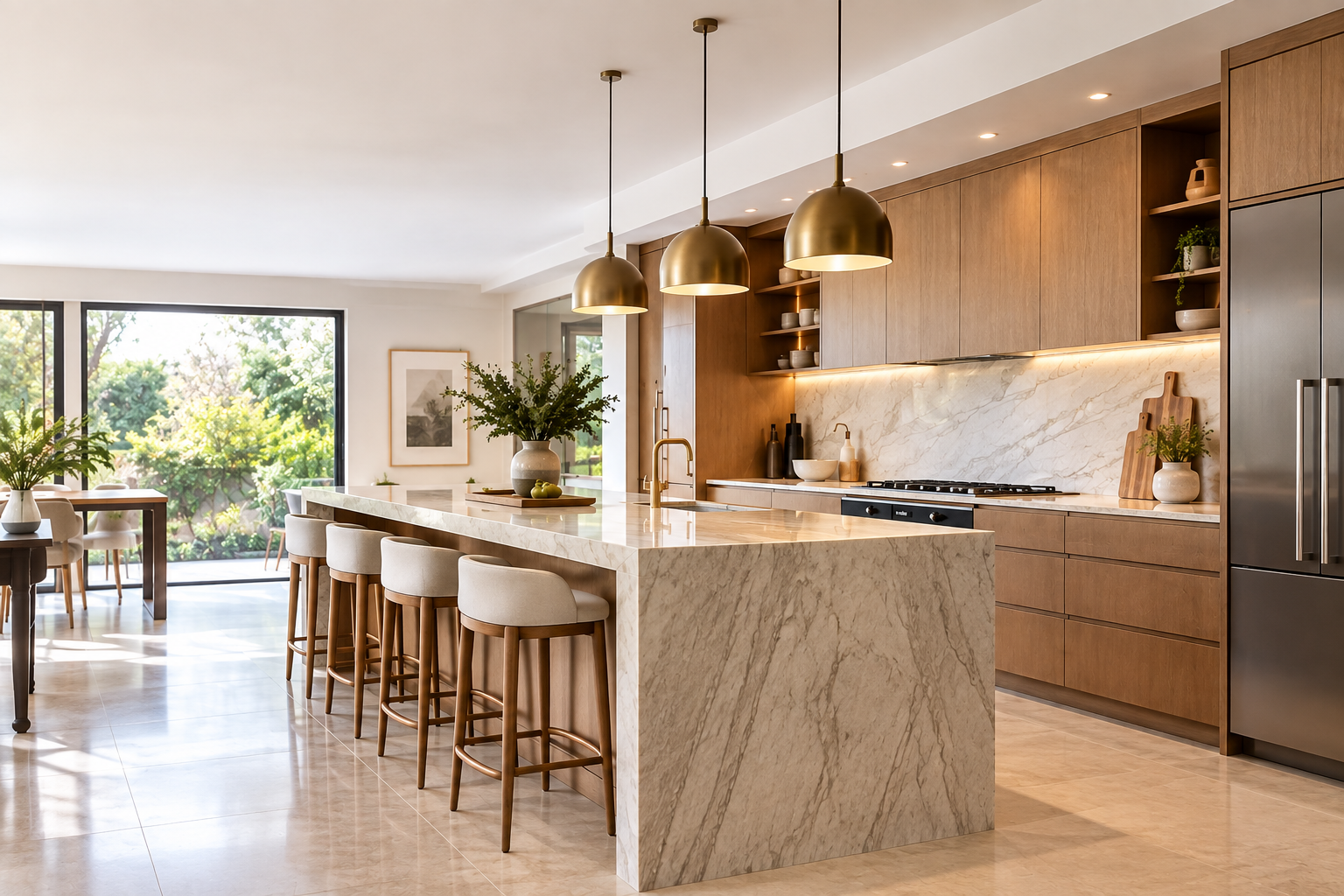
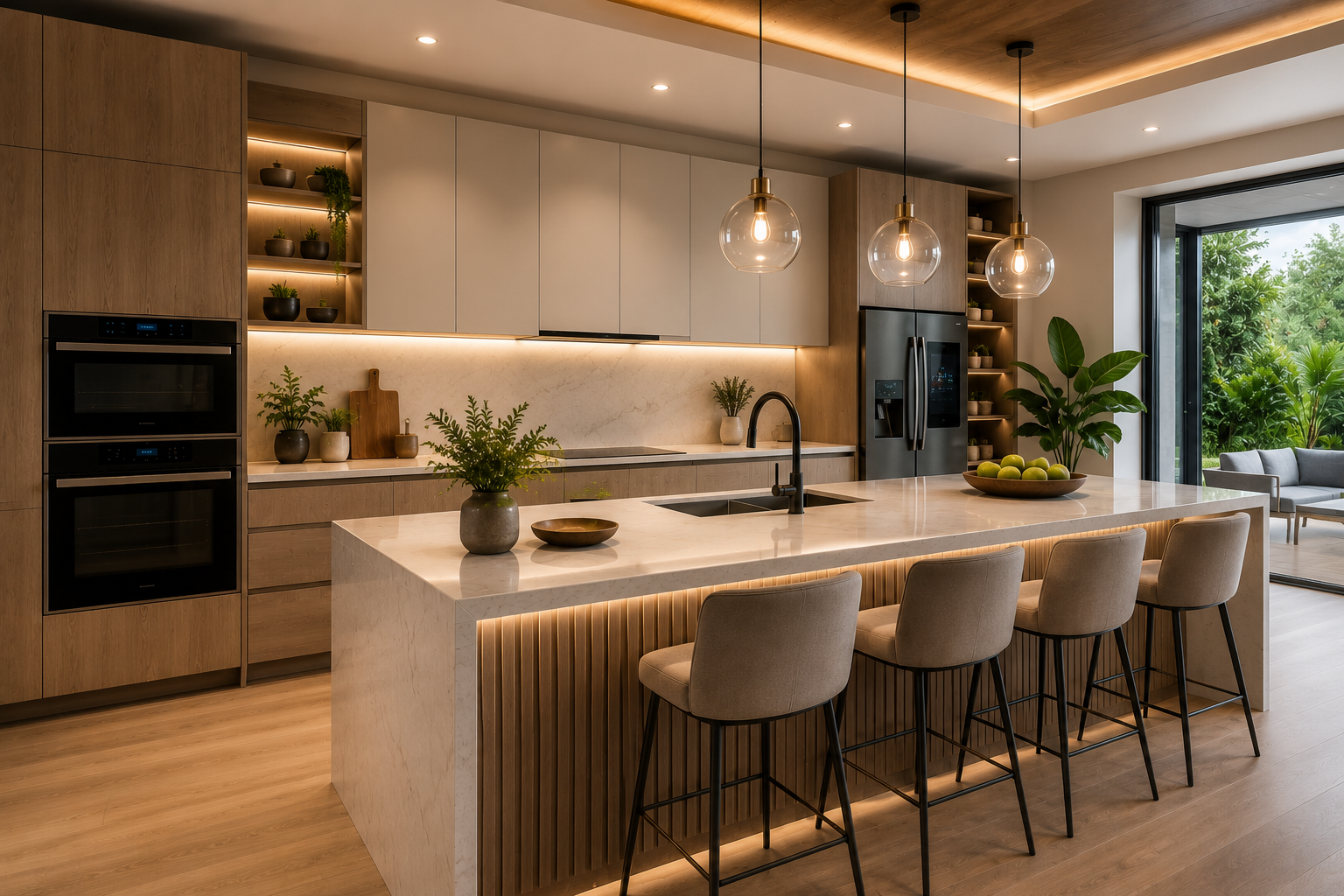
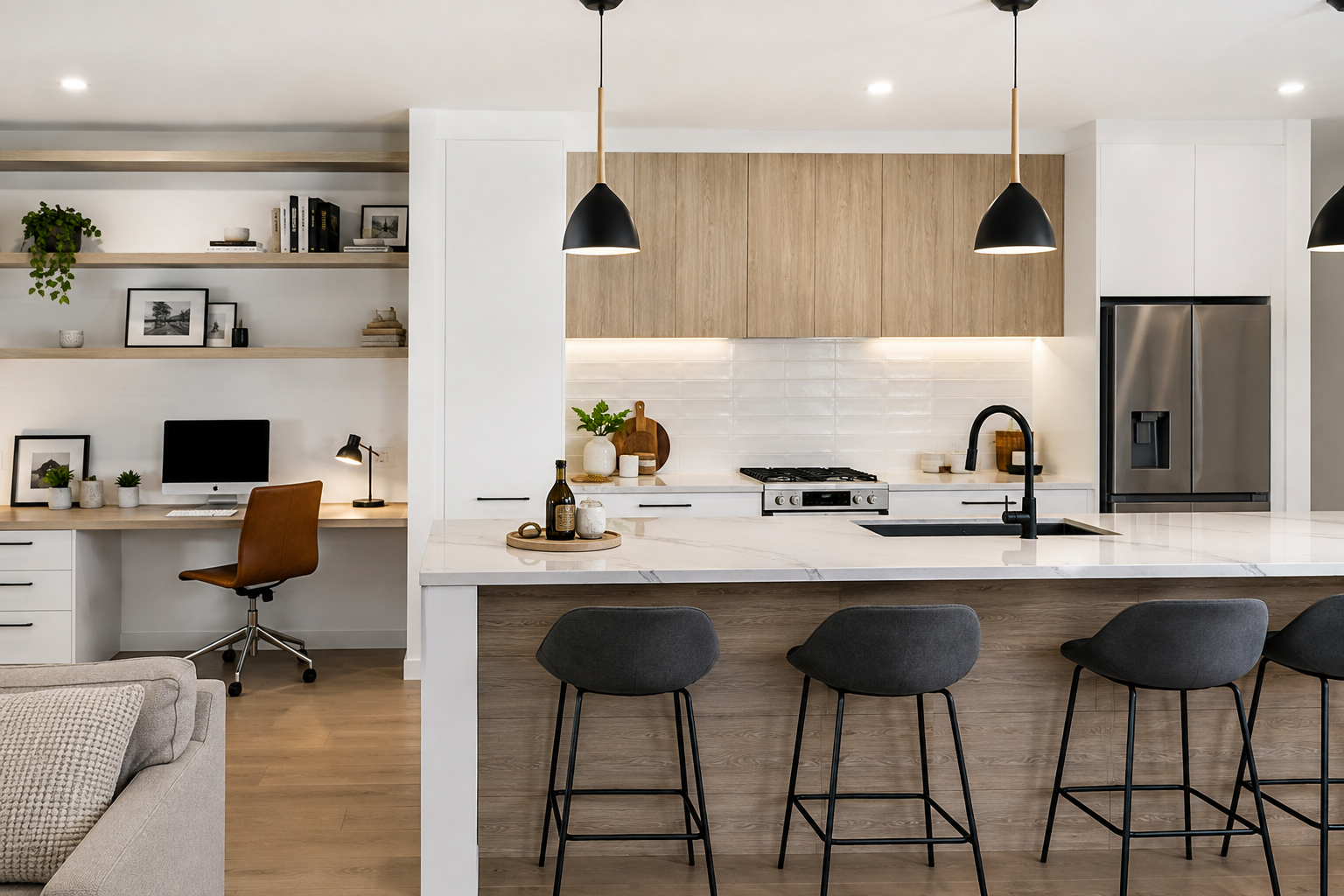
The Kitchen Island: The Ultimate Integrator
Your island acts as:
- A visual anchor
- A dining extension
- A serving countertop
- A casual seating zone
- A workspace
Design notes:
- Use the same benchtop across the island + kitchen to maintain unity.
- Add pendant lighting to visually separate the kitchen zone without closing it off.
- Consider overhang seating for multifunctionality.
Lighting Schemes for Seamless Open Plan Living
A layered lighting strategy includes:
Ambient Lighting
Downlights distributed evenly across all zones.
Task Lighting
Under-cabinet lighting in the kitchen.
Accent Lighting
Feature pendants, wall lamps in the living area, LED strip lighting.
Mood Lighting
Smart dimmers help transition between cooking, entertaining, and relaxing.
Casey Constructions often integrates lighting planning early to avoid costly retrofits.
Material Selection: The Glue That Holds the Space Together
Consistency is the secret.
Match across:
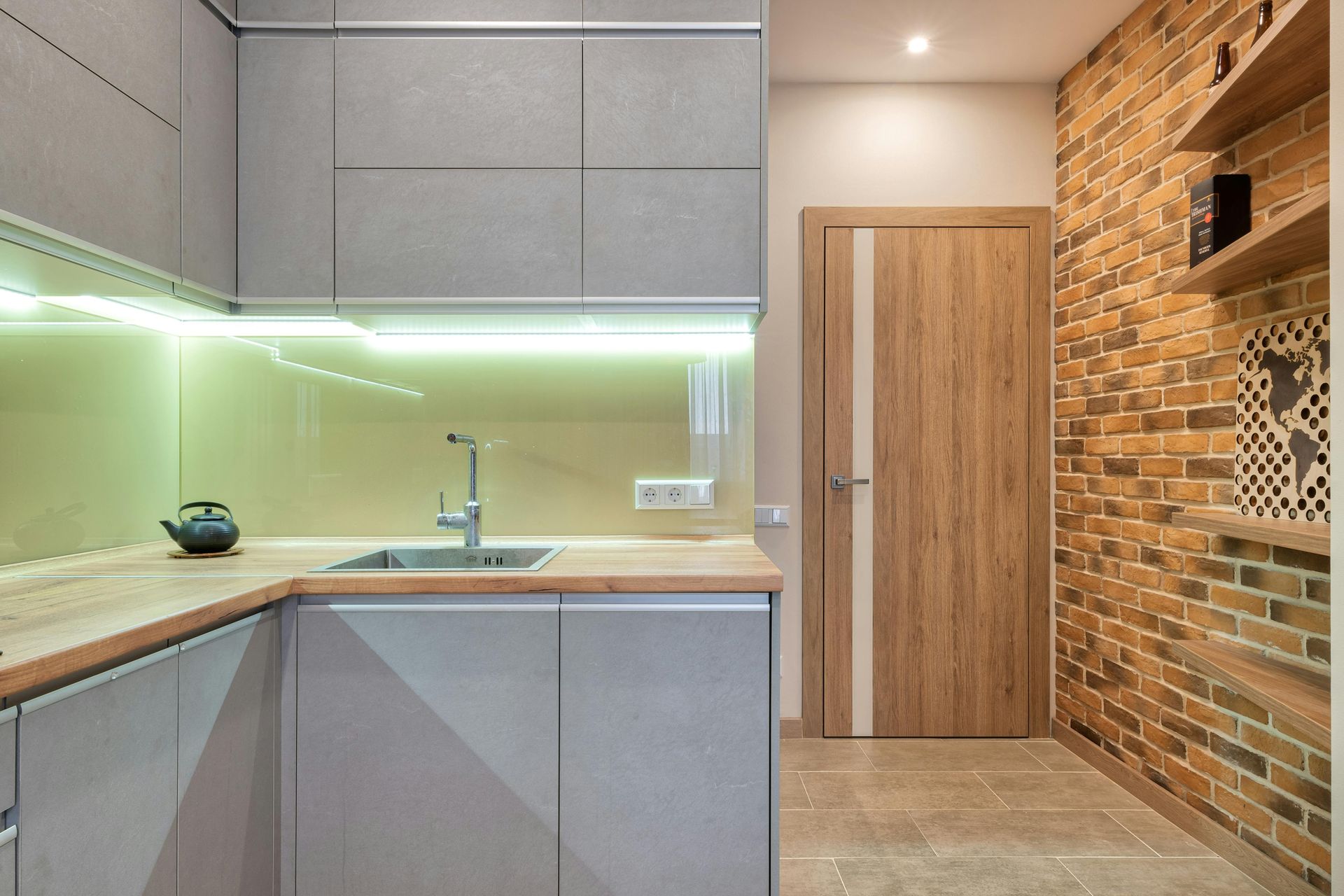
- Cabinet finishes
- Timber tones
- Stone surfaces
- Metal accents
- Soft furnishing textures
Aim for synergy: if the kitchen has matte black hardware, reflect that in dining chair legs or living room décor.
Acoustic Solutions for Open Plan Harmony
Open layouts can amplify noise. Smart solutions:
- Soft rugs
- Upholstered furniture
- Acoustic wall panels
- Soft-close kitchen cabinetry
- Heavy curtains
- Plants (yes, they absorb sound)
These reduce echo and maintain comfort, especially in high-traffic homes.
Storage That Keeps Everything Clutter-Free
A clutter-free open plan layout is non-negotiable if you want the space to feel cohesive and high-end. Prioritising full-height kitchen cabinetry instantly maximises vertical space and keeps everyday essentials hidden from view. Hidden appliance garages also play a crucial role, allowing benchtops to stay clean and uninterrupted.
In the living and dining zones, built-in TV units and floating shelves offer streamlined storage without adding bulk. Sideboards and buffets provide additional concealed space while doubling as stylish design elements that visually anchor the room.
Multi-functional pieces like storage ottomans help maintain order without compromising comfort. And if your home has stairs, under-stair storage is a smart way to capture unused square metres.
When everything has a designated place, your open plan environment feels larger, more luxurious, and far more functional.
Small Home? No Problem. Smart Open Plan Strategies
Small homes can still deliver a spacious, high-performing open plan layout when the design strategy is sharp. The right visual and structural choices can completely shift how large the space feels. Start by leaning into light, neutral colour palettes they naturally brighten the room and create an airy, connected look across the kitchen, dining, and living zones.
Choosing low-profile furniture also makes a major impact. Pieces with slim legs, minimal bulk, and clean silhouettes open up sightlines and prevent the space from feeling crowded. To amplify the illusion of depth even further, mirrored splashbacks reflect light and visually expand compact kitchens.
When flexibility matters, foldable or extendable dining sets provide functionality without permanently consuming floor space. Pair this with vertical storage solutions tall cabinetry, wall-mounted shelving, and integrated units to keep clutter off the floor and the layout feeling streamlined.
A slim yet functional island can act as both a workspace and a divider between zones without overwhelming the room. In tight footprints, every centimetre needs to work harder. This is exactly where Casey Constructions delivers operational value, engineering smart, tailored layout solutions for compact open plan homes.
Creating Consistent Flow Across All Zones
Your goal: a layout where every zone feels connected but purposeful.
Checklist for Perfect Flow
- Use consistent flooring
- Keep pathways wide
- Align major furniture along shared sightlines
- Reinforce colours and materials across zones
- Avoid overly contrasting décor elements
- Position art or lighting as guiding anchors
Styling Tips for the Final Touch
- Repeat textures (wood, metal, linen) strategically
- Carry accent colours across two or more zones
- Keep sightlines clean no visual obstructions
- Use plants as soft dividers
- Layer lighting for both daytime and evening use
- Choose furniture that speaks the same design language
Why You Should Bring in Experts Like Casey Constructions
Open plan renovations demand structural understanding, design strategy, and precision execution. Casey Constructions brings all three to the table. Whether it's removing load-bearing walls safely, redesigning layouts, or delivering cohesive finishes their team ensures your open plan vision becomes a polished reality.
Conclusion
A seamless open plan layout isn’t something that just falls into place — it’s intentionally engineered with strategy, precision, and design discipline. When your kitchen, dining, and living areas are planned as one unified ecosystem, the entire atmosphere of your home shifts. Movement feels effortless, light travels freely, and every square metre begins to perform at a higher level.
The payoff goes beyond aesthetics. A well-executed open plan layout enhances functionality, improves social connection, and creates a more spacious, future-ready home that adapts effortlessly to the way you live. It’s a long-term investment in comfort, flow, and modern living — and when done right, it elevates your everyday experience in ways you immediately feel.
FAQs
1. How do I make my kitchen, living, and dining areas look cohesive in an open plan layout?
Consistency is the key driver. Use unified flooring, complementary colour palettes, and recurring materials like timber, metal accents, or stone finishes. Keep sightlines clean, repeat textures strategically, and ensure lighting flows smoothly from one zone to the next for visual harmony.
2. What’s the best way to define zones in open plan living without using walls?
Zoning relies on subtle visual cues, not physical partitions. Rugs, furniture orientation, pendant lights, ceiling treatments, and decorative elements help distinguish areas while maintaining openness. Strategic placement creates clear function-specific pockets without breaking the space.
3. How can I make a small open plan kitchen–living area feel bigger?
Lean into light colours, slim furniture, mirrored surfaces, and vertical storage. Choose a streamlined island, opt for foldable dining pieces, and maintain a decluttered layout. These visual and spatial strategies make compact spaces feel significantly more expansive.
4. What materials work best for unifying an open plan kitchen, dining, and living room?
Stick with a cohesive palette of durable, versatile materials. Timber, matte cabinetry, stone benchtops, metal accents, and soft textiles all help tie the zones together. Repeating these materials across multiple areas creates a seamless, intentional design story.
5. Why should I hire a professional like Casey Constructions for open plan renovations?
Open plan living involves structural considerations, layout optimisation, and precision engineering. Casey Constructions brings expert knowledge of load-bearing walls, zoning strategies, and integrated design solutions ensuring your open plan transformation is both safe and visually flawless.
Ready to reimagine your home with a space that feels bigger, brighter, and built for modern living? Partnering with a renovation specialist like Casey Constructions ensures your open plan transformation is executed with precision, strategic design, and flawless visual cohesion. Take the first step toward a seamless, stress-free renovation and unlock a high-performance home that truly supports your lifestyle.
Book your consultation today and start your open plan journey with confidence.